Table of Contents
3. Spot Wallet vs Margin and Futures Wallets
4. Custody Choices: Exchange Spot Wallet vs Self-Custody
5. Setting Up and Funding a Spot Wallet
6. Trading From Your Spot Wallet: Order Types and Execution
7. Fees, Discounts, and Hidden Costs
8. Security Best Practices for Your Spot Wallet
9. Portfolio Management: Tracking, Rebalancing, and Automation
10. Advanced Power Tips: Multichain, Whitelists, Tax Lots, APIs, and Proofs
What Is a Spot Wallet?
Interested in entering the crypto market? You can easily purchase Bitcoin (BTC) through a secure platform offering fast transactions, transparent fees, and a smooth experience for all users.
A spot wallet is the primary account on a crypto exchange or wallet app where your actual crypto balances live and settle. When you buy BTC with USDT on the spot market, those coins move immediately into your spot wallet and remain yours without leverage or borrowing. This makes the spot wallet the hub for deposits, withdrawals, trades, and long-term custody decisions.
Unlike margin or futures wallets—where positions, collateral, and funding rates complicate things—the spot wallet is straightforward: you own the assets outright. It holds your available crypto and fiat balances, shows your unrealized gains based on market prices, and enables transfers between your own wallets or external addresses. For most users, mastering the spot wallet is the first step toward safe, confident crypto use.
Because it’s the default destination for funds, your spot wallet also anchors critical workflows: KYC completion, enabling two-factor authentication (2FA), configuring address whitelists, and understanding deposit networks and tags. Whether you’re dollar-cost averaging into blue chips or rebalancing a diversified portfolio, the spot wallet is your daily driver.
How a Spot Wallet Works
At its core, a spot wallet maintains ledgers of your balances per asset and per network. When you deposit, the system monitors blockchain addresses (potentially with memos/tags for networks like XRP or XLM) and credits your account once a transaction receives the required confirmations. When you trade, the engine debits one asset and credits another after the order executes. When you withdraw, it broadcasts a transaction to the chosen network, deducts the network fee, and updates your balance.
Exchanges typically support multiple networks for the same asset (e.g., USDT on Ethereum, Tron, Arbitrum). Choosing the correct network is critical: deposits sent to the wrong chain can be unrecoverable. Minimum deposit thresholds, required memos, and internal transfer options (user-to-user without chain fees) all influence how quickly and cheaply funds move. Many platforms also sweep small residuals (“dust”) into a chosen token at intervals, simplifying portfolios.
On the backend, reputable exchanges segregate a majority of user funds in cold storage with multisig or MPC (multi-party computation), keeping hot wallets liquid for withdrawals and trading. Proof-of-reserves and liabilities audits, when done correctly, provide transparency into the exchange’s solvency, while your spot wallet UI presents a clear snapshot of holdings, pending transactions, and activity logs.
Spot Wallet vs Margin and Futures Wallets
The distinction between a spot wallet and leveraged wallets matters for risk, fees, and complexity. Spot trading uses only your available balances; margin borrows funds against collateral; futures settle via contracts, not immediate asset delivery. Here’s a quick comparison to ground your strategy:
| Feature | Spot Wallet | Margin Wallet | Futures Wallet |
|---|---|---|---|
| Ownership | Direct asset ownership | Borrowed funds + collateral | Contract exposure, not coins |
| Leverage | No | Yes (e.g., 3x–10x) | Yes (up to 100x+) |
| Settlement | Immediate coin delivery | Liabilities + interest | Mark price and PnL |
| Risks | Market volatility | Liquidation risk | Liquidation + funding rate |
| Use Case | Investing, transfers | Amplified exposure | Hedging/speculation |
For most newcomers and long-term investors, the spot wallet is the safest and clearest environment. You can’t be liquidated because there’s no borrowed capital. You still face market risk, of course, but position sizing and diversification are easy to manage without the compounding pressure of leverage or funding payments.
Custody Choices: Exchange Spot Wallet vs Self-Custody
You can hold assets in an exchange spot wallet (custodial) or a self-custody wallet (you control the keys). Each approach has trade-offs in convenience, control, and security. Exchange spot wallets integrate trading, staking, and quick swaps with strong operational security for hot/cold storage, but you rely on the platform’s solvency and processes for withdrawals. Self-custody gives sovereignty—your keys, your coins—but demands reliable key management, backups, and phishing resistance.
Many investors blend both: keep active trading balances on an exchange spot wallet and store long-term holdings in a hardware or MPC-based self-custody wallet. This hybrid approach maximizes liquidity for trades while limiting custodial risk. Always evaluate an exchange’s proof of reserves and liabilities disclosures, SOC audits, and operational track record before trusting it with significant balances.
If you choose self-custody for your “cold” stack, understand derivation paths, address formats, and network fees. When interacting with DeFi from self-custody, you’ll manage gas, nonce, and approvals directly. When moving between self-custody and an exchange spot wallet, test with a small amount first, verify network compatibility, and save trusted addresses via whitelist features to avoid errors.
Setting Up and Funding a Spot Wallet
Getting started is straightforward, but precision matters. Follow these steps to minimize risk and friction while funding your spot wallet for the first time.
- Choose a reputable exchange: Look for strong security history, transparent fees, and regulatory compliance. Check if they publish proof-of-reserves with user-verifiable Merkle trees.
- Complete KYC and enable security: Verify identity as required. Immediately enable 2FA (TOTP or a hardware security key) and set up anti-phishing codes and withdrawal whitelists.
- Generate a deposit address: In the spot wallet, select the asset, choose the correct network (e.g., ETH vs Arbitrum vs Tron), and copy the address. Note any memo/tag requirements.
- Send a test transaction: Start with a small amount to confirm network, tag, and timing. Verify the deposit shows up after confirmations.
- Fund your main transfer: After the test clears, send your intended amount. Factor in network fees and any minimum deposit thresholds.
- Label addresses and save whitelists: Store known addresses with clear labels. Many exchanges require a cooldown period after adding new addresses for security.
- Review balances and history: Confirm credit, check the transaction hash, and verify that your spot wallet shows available funds for trading.
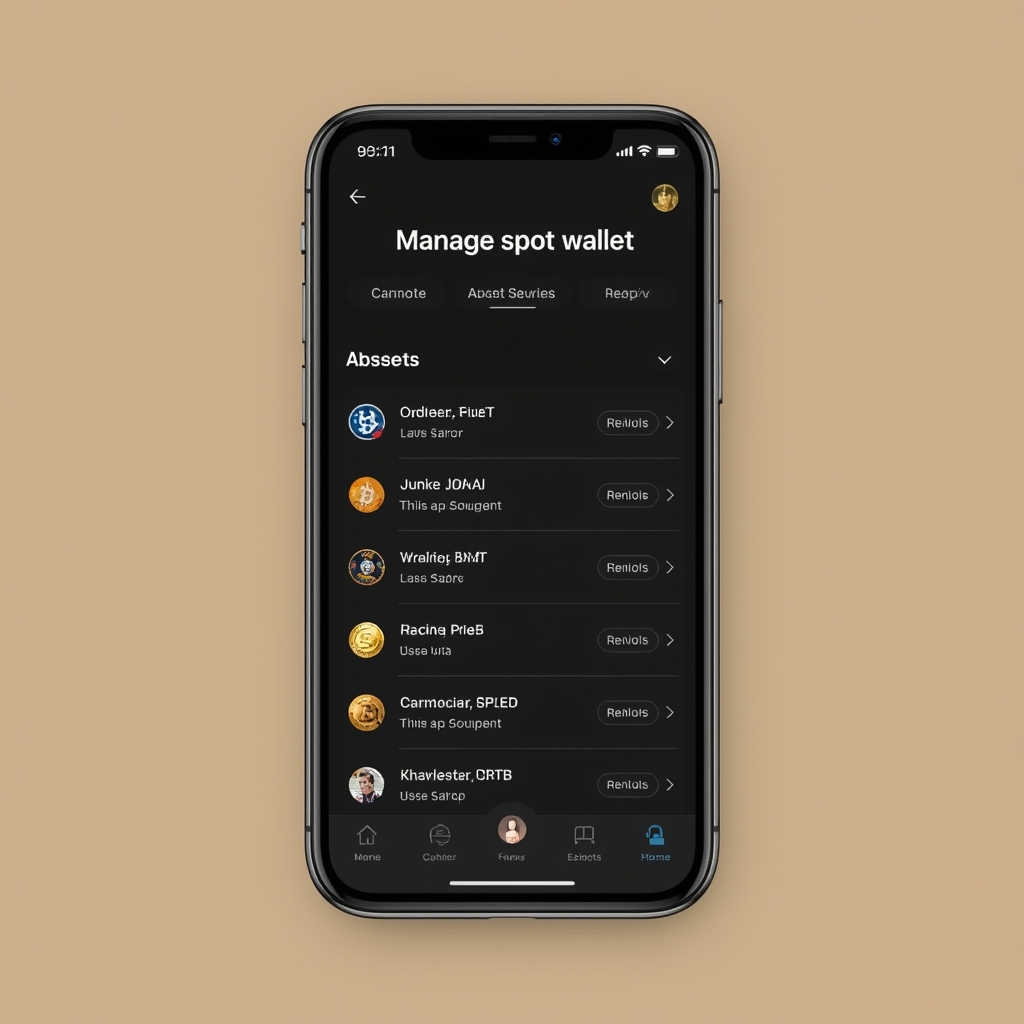
Pro tip: Some exchanges offer internal, off-chain transfers between users at zero fees and near-instant speed. If moving funds between your own accounts on the same platform, use internal transfers to avoid blockchain fees and delays, then consolidate balances in your primary spot wallet.
Trading From Your Spot Wallet: Order Types and Execution
Your spot wallet balances fuel spot trades. A market order executes immediately at the best available price, ideal for speed but potentially incurring slippage in thin markets. A limit order sets your preferred price and executes only if the market reaches it, often qualifying for maker fee discounts. Advanced orders like stop-loss and take-profit help automate risk control and exits.
Before placing orders, assess order book depth and recent trade history. Liquidity varies widely by pair and venue; a seemingly small market buy can slip prices if book depth is shallow. For larger orders, consider iceberg or TWAP features if available, or split orders manually to minimize market impact. Route across pairs (e.g., ALT/USDT then USDT/BTC) when a direct pair is illiquid.
Keep an eye on settlement: once the order fills, your spot wallet reflects new balances. If you frequent multiple exchanges, align ticker symbols and networks—WRAPPED versus native assets can be confusing. And remember: if you’re uncomfortably uncertain about an order, switch to a small size first to validate your assumptions and the platform’s behavior.
Fees, Discounts, and Hidden Costs
Understanding the true cost of using a spot wallet helps you trade and transfer more efficiently. Expect three main cost categories: trading fees, network fees for deposits/withdrawals, and occasional conversion or “sweep” costs. Exchanges also offer discounts via native tokens, volume tiers, or maker/taker incentives.
| Fee Type | Where It Applies | Typical Range | How to Reduce |
|---|---|---|---|
| Trading (Maker/Taker) | Spot orders | 0.00%–0.20% | Use limit (maker), reach VIP tiers, hold native token |
| Withdrawal (Network) | On-chain transfers | Varies by chain | Choose cheaper networks, bundle withdrawals |
| Conversion/Sweep | Dust or auto-convert | Small spread | Manual optimize, fewer dust assets |
- Prefer maker orders when possible; some venues pay rebates at higher tiers.
- Consolidate withdrawals to reduce per-transaction fees, but balance against timing risk.
- Compare networks for the same token (e.g., USDT-TRON vs USDT-ETH) and verify compatibility.
- Monitor withdrawal queues during network congestion; fees may rise and confirmation times may extend.
Security Best Practices for Your Spot Wallet
Security is non-negotiable. Treat your spot wallet like a bank vault connected to fast-moving markets. Combine platform controls with your own operational discipline to prevent loss from phishing, malware, or social engineering.
- Enable strong 2FA: Prefer TOTP apps or a FIDO2 hardware key; avoid SMS where possible.
- Set withdrawal whitelists: Only allow pre-approved addresses; enable cooldowns for new entries.
- Use an anti-phishing code: The exchange will display your custom phrase in legitimate emails.
- Segment balances: Keep only active trading funds on exchange; store long-term holdings in self-custody.
- Harden devices: Keep OS and browsers updated, use password managers, and avoid browser extensions you don’t need.
- Beware address poisoning: Always verify full addresses and memos; don’t rely on partial prefixes/suffixes.
- Secure APIs: Use read-only keys for analytics; restrict IPs and permissions for trading bots; never enable withdrawals via API unless absolutely necessary.
- Audit activity: Regularly review login history, active sessions, and security logs for anomalies.
Portfolio Management: Tracking, Rebalancing, and Automation
A spot wallet isn’t just for one-off trades—it’s a live portfolio. Set target allocations, then use periodic or threshold-based rebalancing to keep risk aligned with your goals. A weekly or monthly rebalance reduces drift; threshold rebalancing (e.g., adjust when an asset deviates by 5% from target) can minimize transaction count while controlling risk.
Automation helps. Many exchanges offer recurring buys for dollar-cost averaging (DCA). You can also deploy grid or rebalancing bots to maintain ranges or allocations, but start small and monitor behavior across market regimes. For tax efficiency, understand how the platform accounts for cost basis (FIFO, LIFO, HIFO) in your jurisdiction and export reports regularly to avoid end-of-year chaos.
Good hygiene includes tagging transactions (deposits, staking rewards, transfers) and consolidating small balances into core holdings. Dashboards that show per-asset PnL and realized gains help you act decisively instead of guessing. If you manage multiple accounts or sub-accounts, define clear roles: one for active trading, another for stablecoin reserves, and a cold-storage plan for long-term positions.
Advanced Power Tips: Multichain, Whitelists, Tax Lots, APIs, and Proofs
Multichain mastery: Before moving stablecoins, compare network costs and speed. Tron and some L2s are cheaper than mainnet Ethereum, but ensure destination support. For tokens with memos (XRPL, Stellar, Cosmos-based exchanges), triple-check the tag; missing memos can delay or forfeit deposits.
Whitelists and sub-accounts: Maintain a curated list of withdrawal addresses—hardware wallet, trusted exchange, and a backup self-custody address. Use sub-accounts to segregate strategies or team access. If your exchange supports internal transfers to sub-accounts, you can ringfence risk while keeping consolidated oversight at the master level.
Tax lots and records: Export CSVs or use API connections to a portfolio tracker. If offered, select tax lot relief methods such as HIFO to minimize realized gains during rebalances. Document staking or earn program yields separately, noting lockups, redemption periods, and on-chain claim transactions if applicable.
API and bots: Use least-privilege permissions, IP whitelisting, and narrow scopes. Test bots in paper trading or with small real balances, and set max order sizes to prevent runaway trades. Monitor latency and slippage; for illiquid pairs, spread orders across time and venues.
Trust but verify: Prefer exchanges that publish real-time or periodic proof-of-reserves and proof-of-liabilities with user-verifiable Merkle leaves. Understand limitations: a snapshot isn’t a guarantee, but when combined with external audits and strong governance, it provides valuable transparency about where your spot wallet assets sit relative to platform obligations.